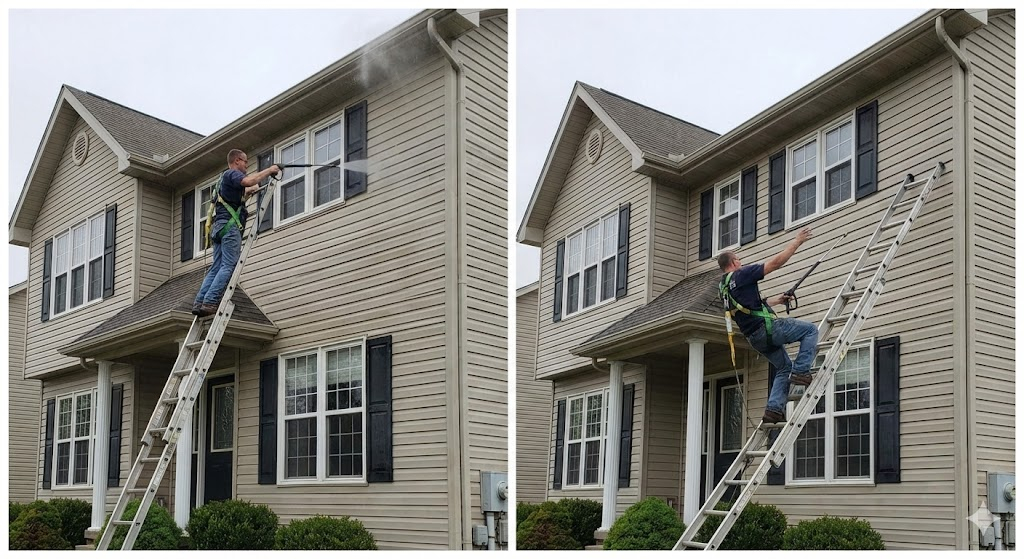
Are you Pressure Washing Off a Ladder? Don’t Do It
Our soft washing system can be done 99% of the time without getting on a ladder. It’s much safer to clean from the ground than to experience the initial “kick” (from the pressure release) and high pressure that homeowners use while balancing on a ladder. Plus, the soft washing won’t damage your siding and is far more effective at cleaning than just water pressure.
The Dangers of Ladders: A Hidden Risk in Everyday Tasks
Ladders are indispensable tools in many homes, workplaces, and industries. From cleaning gutters to painting walls, installing light fixtures to reaching high shelves, ladders provide us with a much-needed lift in completing tasks. While they are incredibly useful, ladders also pose significant risks to those who use them incorrectly or without the proper precautions. According to the U.S. Consumer Product Safety Commission (CPSC), ladder-related injuries are common and can be severe, leading to broken bones, spinal injuries, and even fatalities. This article explores the dangers of ladders and offers tips on how to stay safe when using them.
Ladder Injuries: A Growing Concern
Each year, thousands of people are injured while using ladders. In fact, the CPSC estimates that ladder-related injuries lead to over 160,000 visits to emergency rooms annually in the United States alone. Injuries from ladders can range from minor sprains and bruises to more serious, life-altering conditions such as head trauma, back injuries, and broken bones. In extreme cases, falls from ladders can result in fatalities.
The primary cause of these injuries is falls. Ladders, particularly when not used properly, are inherently unstable. If a person loses their balance or the ladder slips, the fall can result in a dangerous outcome, especially when working at heights. Ladder falls are especially hazardous in occupations like construction and maintenance, where workers are often required to reach significant heights, making the risk of injury even greater.
Common Causes of Ladder-Related Injuries
Several factors contribute to the high number of ladder accidents, and many of these can be avoided with proper safety measures. Below are some of the most common causes of ladder-related injuries:
Improper Ladder Selection
Not all ladders are created equal. Different tasks require different types of ladders, and choosing the wrong one can lead to instability. For example, using a step ladder for tasks that require reaching higher than its intended height can compromise safety. Similarly, choosing a ladder made from the wrong material, such as using a metal ladder near electrical work, can result in electrocution.
Incorrect Ladder Setup
A ladder must be set up correctly to avoid tipping or slipping. For extension ladders, the angle at which the ladder is placed is crucial—too steep or too shallow can make the ladder unstable. For step ladders, it’s important to ensure that all four feet are level and that the ladder is fully open before use.
Failure to Maintain Three Points of Contact
To maintain stability while on a ladder, the user should always have three points of contact—two hands and one foot or two feet and one hand—at all times. Reaching or overextending while on a ladder can cause it to become unbalanced, resulting in a fall.
Ladder Wear and Tear
Many ladder-related accidents are caused by faulty or damaged ladders. Over time, ladders can become worn, with parts like the feet, rungs, or locking mechanisms becoming compromised. A ladder that’s in disrepair may not provide the stability needed to safely support the user. Always inspect a ladder before use and retire any ladders that show signs of damage.
User Inattention or Distraction
Using a ladder while distracted—whether by a phone, conversations, or other distractions—can result in accidents. Inattention can also lead to poor judgment, such as leaning too far to one side or carrying heavy objects while climbing.
Ladder Safety Tips
While ladder-related injuries are common, they are largely preventable with the proper precautions. Here are some essential ladder safety tips:
Choose the Right Ladder
Always select a ladder that is appropriate for the task at hand. Ensure the ladder is tall enough to reach the work area without having to stand on the top rungs. Choose a ladder made from the right material (e.g., fiberglass for electrical work) to avoid risks.
Inspect Before Use
Examine the ladder for any signs of wear and tear before using it. Check the rungs, feet, and locking mechanisms to ensure they are secure and in good condition. If a ladder is damaged or unstable, do not use it.
Set Up Correctly
For extension ladders, follow the 4:1 rule: for every four feet of height, place the base of the ladder one foot away from the structure. Ensure that the ladder is on a stable, flat surface, and for step ladders, open the ladder fully and make sure it is secure.
Maintain Three Points of Contact
Always keep three points of contact with the ladder while climbing—either two hands and one foot, or two feet and one hand. This provides maximum stability and reduces the risk of falling.
Stay Focused
Avoid distractions while on a ladder. Focus on the task at hand and keep both hands free of objects whenever possible. If you need to carry something while on a ladder, consider using a tool belt or hoisting the object up after you.
Never Overreach
Overreaching while on a ladder is one of the leading causes of falls. If you need to reach beyond the ladder’s safe limit, descend and move the ladder to a more secure position instead of leaning too far.
Conclusion
While ladders are essential tools for a variety of tasks, they come with a significant risk of injury if not used correctly. By understanding the common causes of ladder-related accidents and following key safety guidelines, we can reduce the risk of harm. Whether at home or at work, taking the time to inspect, set up, and use a ladder safely can make all the difference in preventing accidents and ensuring that the task at hand is completed without incident. Always prioritize safety, and never underestimate the potential dangers posed by something as seemingly simple as a ladder.
If you are going to clean your house the “old school” way, be safe about it. If you’re tired of the hassle and risk of being on a ladder, let us do the work for you. Our pressure washing company is located in Newark, Ohio, and serves all the surrounding areas.